



IGF-1 LR3 side effects include hypoglycemia, water retention, joint stiffness, and a risk of accelerating pre-existing tumor growth. This engineered analog of human IGF-1 has a half-life of several hours rather than minutes, which amplifies both its benefits and its hazards. Anyone exploring IGF-1 peptide therapy needs a licensed provider who reviews baseline labs before recommending a protocol.
How IGF-1 LR3 differs from native IGF-1
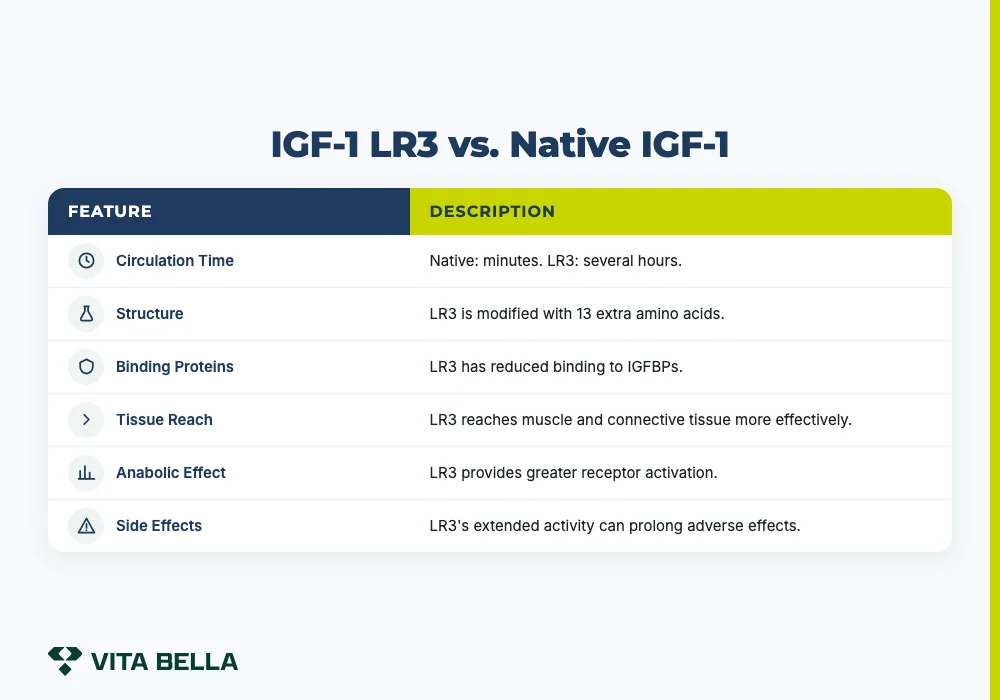
Native IGF-1 is cleared from circulation within minutes. IGF-binding proteins (IGFBPs) neutralize it quickly, limiting how much reaches target tissues. IGF-1 LR3 changes that picture entirely.
It is a modified version of human IGF-1, extended by 13 amino acids and featuring a substitution at arginine-3 that reduces IGFBP binding, according to work in the Journal of Pharmaceutical and Biomedical Analysis (Thomas et al., 2017).
Once IGFBP binding is reduced, the molecule reaches muscle, tendon, and connective tissue far more effectively. It binds the IGF-1 receptor and activates the Akt/mTOR pathway, driving protein synthesis and cellular repair, as documented in a 2019 Frontiers in Nutrition review (Barclay et al., 2019).
Greater receptor activation delivers greater anabolic effect. It also delivers greater systemic IGF-1 signaling exposure, and that exposure is what generates the side effects below.
How long does IGF-1 LR3 stay active in the body?
The igf-1 lr3 half-life spans several hours, compared to the minutes-long clearance window of native IGF-1. That extended activity is central to both its appeal and its risk profile. Adverse effects, including igf-1 hypoglycemia, persist longer than they would from the body's natural IGF-1 pulse. How you respond in the hours after administration is part of what a provider tracks.
IGF-1 LR3 side effects: the full picture
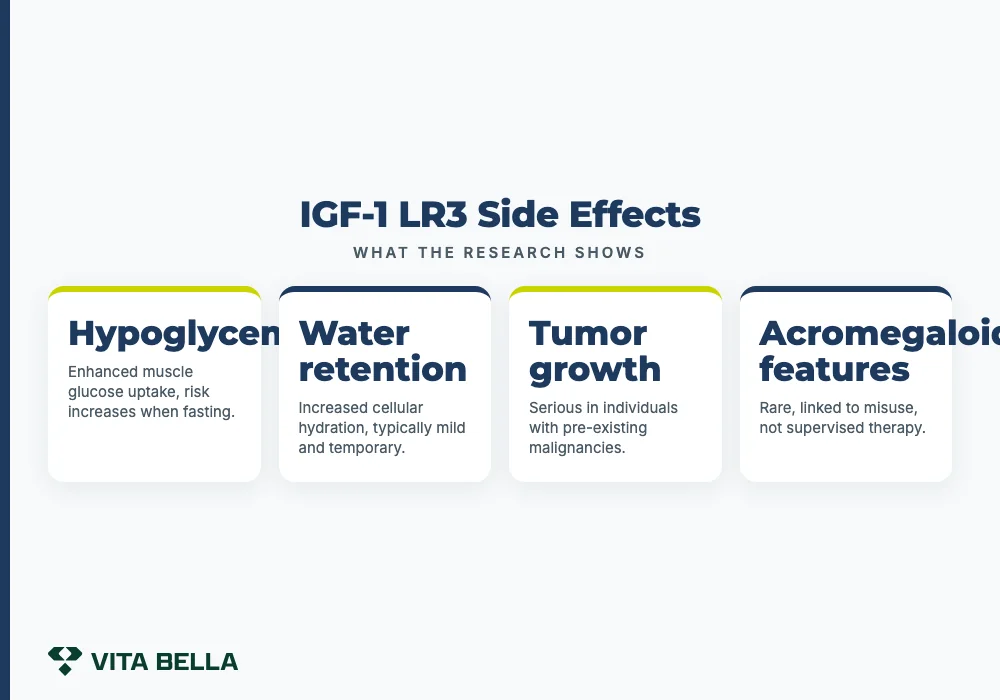
Side effect severity depends on individual metabolic response, hormone baseline, and the protocol a licensed provider designs. The table below summarizes reported and potential effects from preclinical and observational data.
| Side effect | Mechanism | Notes |
|---|---|---|
| Hypoglycemia | Enhanced muscle glucose uptake | Risk increases when fasting or under-eating |
| Water retention | Increased cellular hydration | Typically mild and temporary |
| Joint and muscle tightness | Fluid shifts in connective tissue | Usually resolves as the body adapts |
| Insulin sensitivity changes | Prolonged IGF-1 receptor activation | Requires periodic glucose monitoring |
| Tumor growth acceleration | IGF-1 receptor stimulation in cancer cells | Serious in individuals with pre-existing malignancies |
| Acromegaloid features | Supraphysiologic IGF-1 over extended periods | Rare; linked to misuse, not supervised therapy |
| Follicular cycle changes | IGF-1 signaling in hair follicle tissue | Relevant for those with androgenetic alopecia |
How does IGF-1 LR3 affect blood sugar?
IGF-1 LR3 lowers blood glucose by driving muscle uptake of circulating sugar. This is the core igf-1 hypoglycemia mechanism: the same pathway that supports igf-1 muscle recovery can drop glucose below safe levels when dietary intake is too low.
A 2019 Frontiers in Nutrition review confirmed that IGF-1 signaling directly affects muscle energy utilization and glucose clearance (Barclay et al., 2019). Symptoms include lightheadedness, shakiness, and fatigue. They typically resolve with carbohydrate intake. Providers screen fasting glucose before prescribing and review dietary habits to reduce this risk.
Does IGF-1 LR3 cause hair loss?
No clinical trial has established that IGF-1 LR3 directly causes hair loss, but the answer depends on dose and individual predisposition. At physiologic levels, IGF-1 signaling appears to support hair follicle maintenance. At supraphysiologic levels, the growth-signaling environment can shift the follicular cycle in ways that accelerate shedding, particularly in individuals with androgenetic alopecia.
Individuals with a personal or family history of androgenic hair thinning should raise igf-1 hair loss risk specifically with their provider before starting.
Tumor growth risk
IGF-1 receptors appear on many cancer cell types, including breast, prostate, and colorectal tumors. IGF-1 LR3 does not cause cancer. It may, however, accelerate progression of pre-existing malignancies by stimulating those receptor pathways.
This is the compound's most serious contraindication. Providers screen personal and family history, along with relevant biomarkers, before prescribing, and will defer or decline therapy when that risk is present.
Acromegaloid effects at excessive levels
Chronically supraphysiologic IGF-1 levels can produce changes resembling growth hormone excess. Possible signs include altered jaw contour, enlarged extremities, and coarsened facial features. These are rare. They are associated with long-term misuse, not supervised therapeutic use, and early changes typically improve when levels normalize.
What are the long-term effects of IGF-1 LR3?
Long-term human safety data for IGF-1 LR3 specifically are limited. Short-term preclinical evidence shows benefits for muscle repair, collagen production, and metabolic balance. The primary long-term concerns are ongoing tumor-stimulation risk in susceptible individuals, possible IGF-1 axis dysregulation with unmonitored use, and cumulative glucose regulation changes if lab reviews are neglected.
A 2023 International Journal of Molecular Sciences review found that IGF-1 delivery strategies for tendon support required structured monitoring to optimize outcomes and limit adverse tissue responses (Miescher et al., 2023). The same logic applies to systemic use. Regular lab review distinguishes supervised therapy from unmanaged risk. Providers check fasting glucose, IGF-1 levels, and a relevant hormone panel at regular intervals.
Is IGF-1 LR3 safe to use?
IGF-1 LR3 is not cleared for general use and is not appropriate for self-administration. Under licensed provider oversight, with baseline labs, appropriate patient selection, and scheduled monitoring, the reported igf-1 lr3 side effects are generally mild and reversible. Without that structure, hypoglycemia risk, tumor-stimulation potential, and hormonal disruption from unmonitored use all increase substantially.
Safety cannot be answered in the abstract. It depends on your IGF-1 baseline, glucose regulation, cancer screening history, and how a provider structures the protocol for your specific profile.
IGF-1 LR3 benefits worth weighing against the side effects
Understanding igf-1 lr3 side effects makes most sense alongside what the compound can deliver. Human muscle cell studies found that IGF-1 increases myotube nuclei, fusion index, and myosin heavy chain content, all key indicators of hypertrophy (Jacquemin et al., 2004). That is the cellular basis of igf-1 lr3 benefits.
A 2020 Cells review confirmed IGF-1-mediated activation of satellite cells that regenerate muscle fibers after damage (Yoshida & Delafontaine, 2020). Recovery happens faster as a result. These mechanisms underpin what researchers attribute to igf-1 muscle recovery in adults returning from injury or intensive training.
Collagen synthesis is another documented benefit. A 2023 tendon cell study showed improved matrix structure following IGF-1 exposure, supporting faster tissue repair (Miescher et al., 2023). Research in muscle regeneration models documented IGF-1 involvement in cellular remodeling pathways relevant to connective tissue health (Kok & Barton, 2021).
Preclinical neural models also link IGF-1 signaling to neuroplasticity and neuronal repair (Forcina et al., 2019).
The igf-1 lr3 dosage a provider selects reflects this full profile. There is no universal protocol. A licensed provider determines the dose after labs, weighing baseline IGF-1, fasting glucose, training demands, and the patient's specific goals.
What a provider evaluates before prescribing IGF-1 LR3
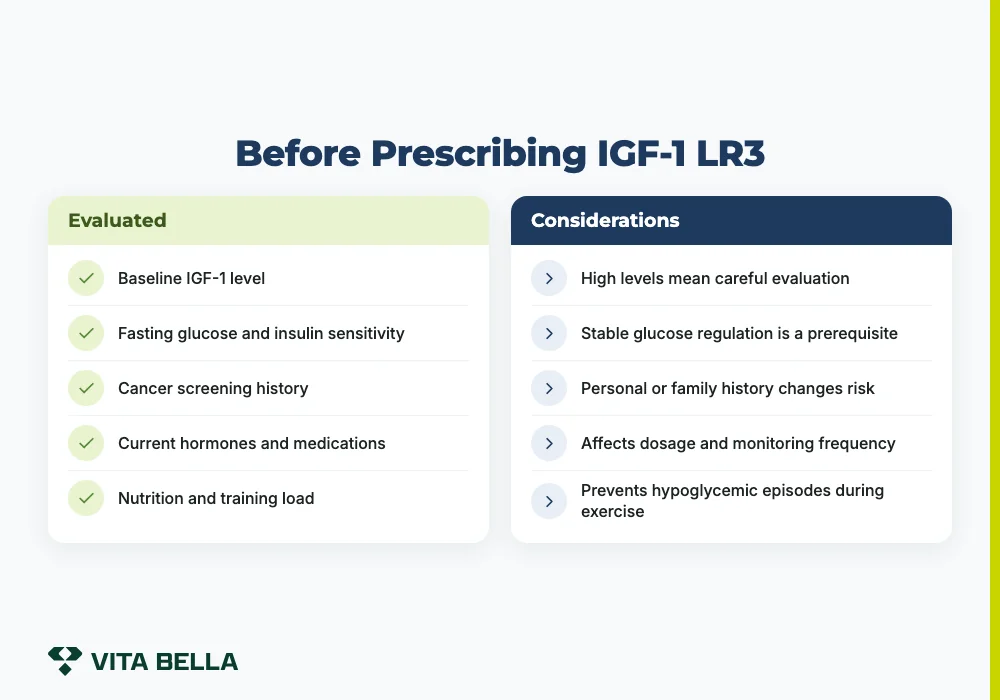
This is where igf-1 peptide therapy decisions actually happen. Managing igf-1 lr3 side effects starts with getting this evaluation right, before a protocol is ever finalized. The prescribing decision goes well beyond a symptom checklist. A licensed provider examines several factors specific to your biology before recommending a protocol:
- Baseline IGF-1 level: Individuals already near the upper end of the normal range need careful evaluation. Adding exogenous IGF-1 LR3 when natural levels are high pushes the system toward ranges associated with the adverse effects above.
- Fasting glucose and insulin sensitivity: Given the igf-1 hypoglycemia risk, stable glucose regulation is a prerequisite. Providers verify this before adding a compound that amplifies muscle glucose uptake.
- Cancer screening history: IGF-1 receptor expression on tumor cells makes this a non-negotiable screening point. Any personal or family history of hormone-sensitive cancers fundamentally changes the risk-benefit calculation.
- Current hormones and medications: IGF-1 signaling interacts with insulin, growth hormone, and thyroid pathways. A full hormone panel reveals interactions that affect both igf-1 lr3 dosage decisions and monitoring frequency.
- Nutrition and training load: Because igf-1 muscle recovery effects depend on adequate protein and carbohydrate intake, providers review dietary patterns to prevent hypoglycemic episodes during exercise.
Knowing what gets evaluated helps you arrive at your first consultation prepared. For a fuller look at how IGF-1 LR3 fits into a recovery and performance protocol, the IGF-1 LR3 overview for growth and recovery covers the mechanism and benefit profile in depth.
For guidance on structuring any peptide therapy safely over time, building a structured peptide protocol outlines what clinical cycling approaches look like in practice.
Start with a provider-led evaluation
If igf-1 lr3 benefits align with your goals and you want to know whether the side effect profile is manageable for your health status, the next step is a structured review. Vita Bella's licensed providers assess your labs, evaluate your hormone baseline, and determine whether IGF-1 peptide therapy fits your protocol. Get Started.
FAQ
Is IGF-1 LR3 safe to use?
IGF-1 LR3 is not cleared for general use and requires licensed provider oversight. Under supervised protocols with baseline labs and scheduled monitoring, reported side effects are generally mild and reversible. Individuals with glucose dysregulation or a history of hormone-sensitive cancers require additional screening before use.
Does IGF-1 LR3 cause hair loss?
No large clinical trial has established a direct causal link between IGF-1 LR3 and hair loss. At supraphysiologic levels, IGF-1 signaling can shift the follicular cycle in ways that may accelerate shedding in individuals with androgenetic alopecia. A provider can assess your personal risk before prescribing.
How does IGF-1 LR3 affect blood sugar?
IGF-1 LR3 enhances glucose uptake in muscle tissue, which can cause transient hypoglycemia when fasting or exercising without adequate carbohydrate intake. A 2019 Frontiers in Nutrition review linked IGF-1 signaling to direct effects on muscle energy utilization and glucose clearance. Providers screen fasting glucose levels before prescribing and adjust recommendations based on dietary patterns.
What are the long-term effects of IGF-1 LR3?
Long-term human safety data for IGF-1 LR3 are limited, and ongoing monitoring is essential. Short-term preclinical studies support benefits for muscle repair and tissue management, but regular lab review is required to track glucose levels, IGF-1 axis balance, and signs of receptor-mediated growth changes. Providers adjust or discontinue therapy based on those results.
How long does IGF-1 LR3 stay active in the body?
IGF-1 LR3 has a half-life of several hours, significantly longer than native IGF-1's half-life of minutes. This extended activity window allows stronger receptor activation across muscle, tendon, and connective tissue. It also means adverse effects, including hypoglycemia, persist longer than they would from the body's natural IGF-1 production.
Sources
- Thomas, A., Walpurgis, K., Delahaut, P., Fichant, E., Schänzer, W., & Thevis, M. (2017). Determination of LongR3-IGF-I, R3-IGF-I, Des1-3 IGF-I and their metabolites in human plasma samples by means of LC-MS. Journal of Pharmaceutical and Biomedical Analysis, 138, 68-75. PubMed
- Barclay, R. D., Burd, N. A., Tyler, C., Tillin, N. A., & Mackenzie, R. W. (2019). The role of the IGF-1 signaling cascade in muscle protein synthesis and anabolic resistance in aging skeletal muscle. Frontiers in Nutrition, 6, 146. PubMed
- Jacquemin, V., Furling, D., Bigot, A., Butler-Browne, G. S., & Mouly, V. (2004). IGF-1 induces human myotube hypertrophy by increasing cell recruitment. Experimental Cell Research, 297(1), 148-160. PubMed
- Yoshida, T., & Delafontaine, P. (2020). Mechanisms of IGF-1-mediated regulation of skeletal muscle hypertrophy and atrophy. Cells, 9(9), 1970. PubMed
- Miescher, I., Rieber, J., & Calcagni, M. (2023). In vitro and in vivo effects of IGF-1 delivery strategies on tendon repair: A review. International Journal of Molecular Sciences, 24(3), 2370. PubMed
- Kok, H. J., & Barton, E. R. (2021). Actions and interactions of IGF-I and MMPs during muscle regeneration. Seminars in Cell & Developmental Biology, 119, 48-56. PubMed
- Forcina, L., Miano, C., Scicchitano, B. M., & Musarò, A. (2019). Signals from the niche: Insights into the role of IGF-1 and IL-6 in modulating skeletal muscle fibrosis. Cells, 8(3), 232. PubMed
For educational purposes only. Not a substitute for medical advice, diagnosis, or treatment. Consult a licensed healthcare provider before making any changes. A licensed provider will determine if a prescription is appropriate after evaluation. Individual results vary. Compounded medications are not FDA-approved for safety, efficacy, or quality.